Technical Specifications
| Parameter | Value |
|---|---|
| Pellet Diameter | 6–8 mm |
| Pellet Length | 10–30 mm |
| Moisture Content | ≤ 10% |
| Ash Content | 2–4% |
| Calorific Value | 16–18 MJ/kg |
| Bulk Density | 600–700 kg/m³ |
| Mechanical Durability | ≥ 95% |
| Impurities | Minimal |
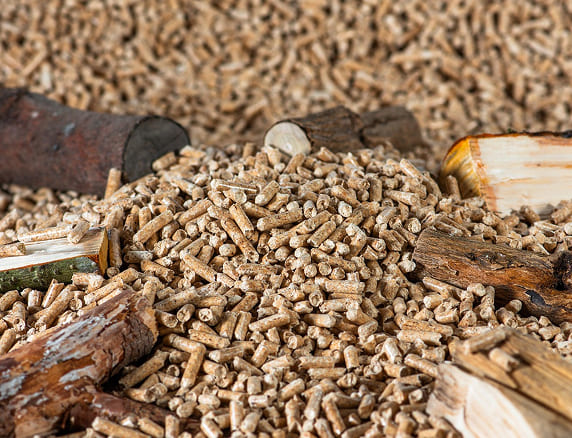
Sunflower husk pellets are a modern granulated biofuel produced from sunflower processing byproducts. The raw material is sunflower husk (shells) generated after seed and oil extraction. Instead of disposal or open burning, this agricultural byproduct is transformed into an energy-efficient fuel with high density and consistent performance characteristics.
During the pelleting process, the raw material undergoes thorough cleaning, drying to optimal moisture levels, and high-pressure compression — without any chemical binders. Particle bonding occurs naturally through lignin present in the plant material. As a result, the pellets maintain environmental purity, emit no toxic compounds during combustion, and are safe for use in industrial heating systems, boiler houses, and power generation facilities.
Key Advantages of Sunflower Husk Pellets
✅ Cost-effectiveness — Competitive pricing compared to wood pellets and fossil fuels
✅ High energy output — Stable calorific value suitable for industrial-scale heating
✅ Sustainable sourcing — Utilizes agricultural waste, supporting circular economy principles
✅ Low emissions — Minimal sulfur and heavy metal content reduces environmental impact
✅ Reliable performance — Consistent size, density, and combustion characteristics
Ideal Applications
- Facilities prioritizing fuel cost optimization with acceptable maintenance intervals
- Industrial boiler houses and combined heat and power (CHP) plants
- Agro-industrial enterprises (oil mills, grain elevators, processing facilities)
- District heating systems with automated fuel feed
Sunflower husk pellets offer high calorific value, low moisture content, and consistent granule geometry — ensuring uniform combustion and predictable heat output. They are convenient to transport, store, and feed automatically into boiler systems. Thanks to their high density, this fuel occupies significantly less space compared to unprocessed biomass.
Due to their optimal price-to-energy ratio, sunflower husk pellets represent a cost-effective alternative to traditional fuels such as coal, fuel oil, or natural gas. Using this type of biofuel enables enterprises to reduce heating costs, decrease dependence on fossil resources, and meet modern environmental requirements and sustainable development standards.